In this story
- Case size and display area aren't the same thing this time
- Sapphire and Ceramic Shield 2 solve different problems
- Weight and color are aesthetic choices and also physical choices
- Battery figures all have conditions, and material doesn't change that
- Siri's later features aren't a reason to pick a material today
When Apple lays out the size chart for the Apple Watch Series 12, one detail is easy to skip past: aluminum and titanium come in 42mm and 46mm, while ceramic comes in 43mm and 47mm. A 1mm difference sounds like a typesetting error. But Apple also gives another set of numbers—the display areas for 42mm and 46mm are 970 square millimeters and 1196 square millimeters respectively, and the ceramic 43mm and 47mm have those same two nominal display areas. In other words, the case is one size larger, but the display area hasn't changed.[1]
That 1mm isn't for the screen. The official specs don't explain the engineering reason for the 1mm difference, and when buying, the first thing to remember is that case size can't be directly converted into screen area.
Case size and display area aren't the same thing this time
Normally when buying a watch, the size choice corresponds to "how big a screen do I want." 42 or 46 is essentially the difference between 970 and 1196 square millimeters of display area. Different size tiers correspond to different display areas; when comparing across materials, you first need to confirm whether you're in the same tier.
The ceramic 43mm corresponds to 970 square millimeters, and the 47mm to 1196 square millimeters. Screen pixels and PPI are identical to the aluminum and titanium versions: 42/43mm is 374×446, 46/47mm is 416×496, both at 326 ppi.[1] So if you're going for ceramic in pursuit of "a larger display area," the 47mm gives you the same nominal display area as titanium 46mm. That extra 1mm of case doesn't buy you more display content.
So what does that 1mm buy? From the official data, it buys changes in weight and thickness. The ceramic version is 9.85mm deep, while aluminum and titanium are 9.7mm; in the 42mm tier, ceramic weighs 41.7g (Pearl White) and 42.8g (Night Blue), titanium is 36.5g, and aluminum GPS is 32.2g. In the 46mm tier, ceramic is 51.3g and 52.9g, titanium is 44.9g, and aluminum GPS is 39.5g.[1]
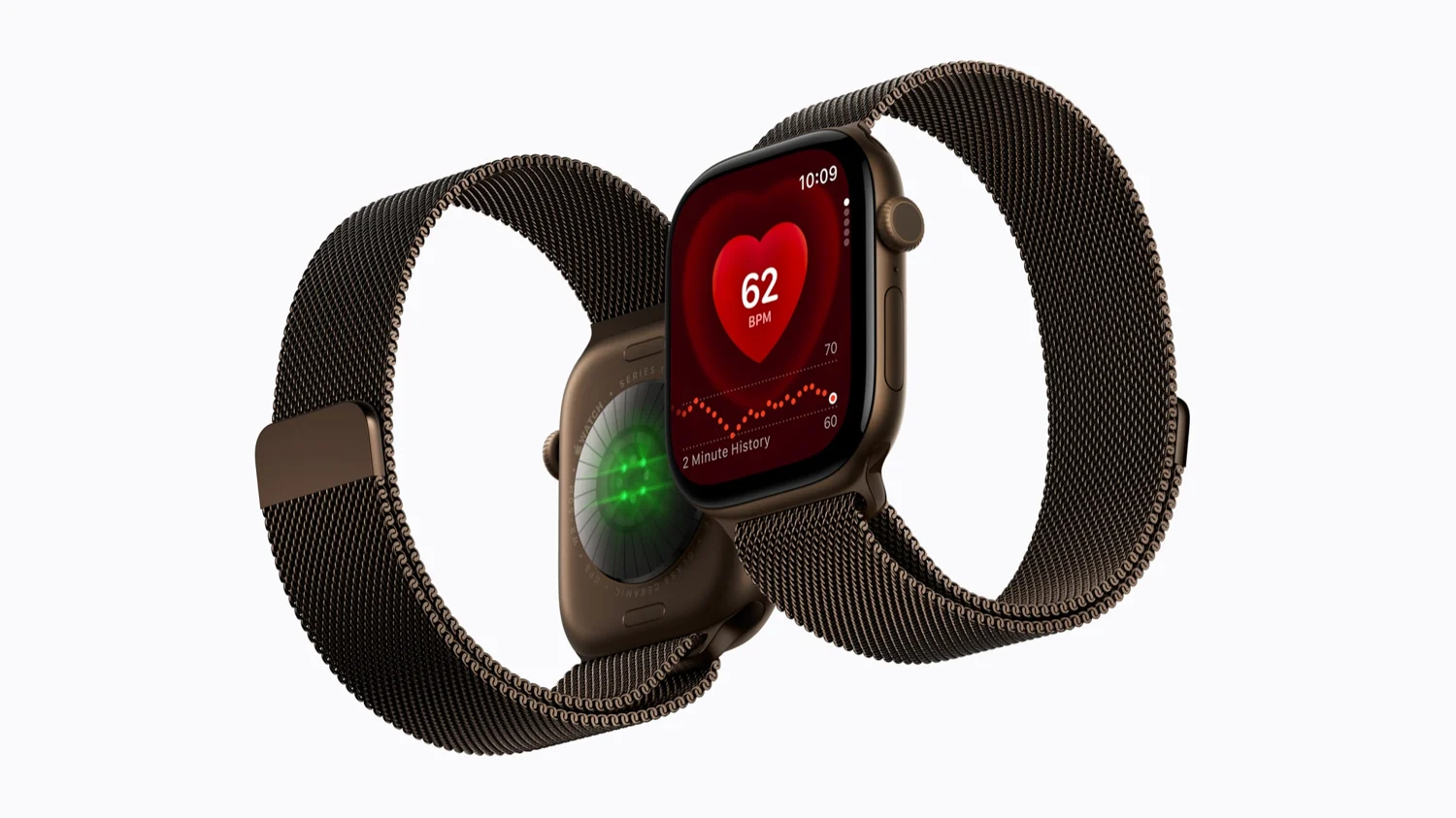
Put these numbers together and you can see that ceramic's positioning isn't "lighter and thinner," but "a different material." It's heavier than titanium, and much heavier than aluminum. Apple doesn't package ceramic as a carrier for more advanced sensors; the sensor configuration is identical across all three materials: second-generation electrical heart sensor, always-on optical heart sensor, blood oxygen sensor, temperature sensor—all the same.[1] Material doesn't imply additional health features, and at the factual level that statement holds.
Sapphire and Ceramic Shield 2 solve different problems
There's a fork in screen protection this time. Aluminum uses Ceramic Shield 2, while titanium and ceramic use a sapphire front crystal.[1] In its press release, Apple says Ceramic Shield 2 is 60 percent tougher than the Ion-X glass previously used on aluminum models.[2] This is an official comparison, referring to the aluminum version's own iteration.
These material names don't constitute a guarantee of everyday scratch or drop resistance. There's no durability testing from this site here, nor enough data to rank the two front crystals as superior or inferior across all scenarios. The manufacturer's iteration comparison for the aluminum front crystal can't be directly used to prove it's more durable than the titanium or ceramic versions.
There's a common reasoning shortcut here: titanium and ceramic use sapphire, so they're more "premium," so they're more worth buying. This reasoning skips two steps. First, a front crystal material name can't substitute for a complete durability comparison. Second, aluminum's Ceramic Shield 2 is also Apple's current latest solution for the aluminum version, not a "downgrade." When choosing a material, treating sapphire as the only variable makes it easy to overlook weight, thickness, and color—differences that are just as real.
Weight and color are aesthetic choices and also physical choices
The ceramic version is 5 to 8 grams heavier than titanium, and 9 to 13 grams heavier than aluminum.[1] Whether that gap is noticeable on the wrist is something the official data can't answer. Apple doesn't provide wearing-comfort data, and I shouldn't invent one. What can be said is: if you're sensitive to weight, the 42mm aluminum GPS + Cellular at 31.5g is the lightest case weight in the spec sheet; if you want cellular, aluminum GPS + Cellular is actually 0.7 to 0.9 grams lighter than the GPS version—this is a number Apple itself lists, and the corresponding spec at the time of purchase should govern.[1]
On color, aluminum has Dark Bronze, Light Gold, Black, and Space Gray; titanium has Radiant Gold and Natural; ceramic has Pearl White and Night Blue.[1][2] Ceramic's Pearl White and Night Blue are options aluminum and titanium don't have—this is a color difference brought by material, not a performance difference. Being willing to spend money on color and texture is a purchase reason that can be acknowledged. But framing it as "ceramic is more worth buying because the material is better" packages an aesthetic preference as a performance judgment.
The spec page and press release reviewed here aren't sufficient to determine the current full price gap across materials. The series purchase starting price stated in the release is "Apple Watch Series 12 starts at $399 (U.S.)."[2] This is the series' U.S. starting price and can't be used as the ceramic version's price. The specific pricing of the ceramic version isn't given in the official materials. Any claim about "how much more ceramic costs than titanium" requires the current complete configuration quote.
Battery figures all have conditions, and material doesn't change that
All official battery numbers carry test conditions. All-day battery life "up to 24 hours of normal use" is defined as: 300 time checks, 90 notifications, 15 minutes of app use, a 60-minute workout with music playback via Bluetooth, and 6 hours of sleep tracking over the course of 24 hours. The GPS version connects to iPhone via Bluetooth the entire time; the GPS + Cellular version includes 4 hours of cellular connection and 20 hours of Bluetooth connection.[1]
Low Power Mode "up to 38 hours" conditions are: 530 time checks, 160 notifications, 26 minutes of app use, a 60-minute workout with music playback, and 6 hours of sleep tracking. The GPS version connects to iPhone via Bluetooth the entire time; the cellular version connects to cellular on demand and 30 hours via Bluetooth to iPhone.[1]
Outdoor workout "up to 10 hours" test conditions are: no iPhone connection, heart rate sensor on, outdoor run.[1] The press release says this is a 25 percent improvement over the previous generation.[2] Fast charging "15 minutes gets up to 12 hours of normal use" also has conditions: using the included magnetic fast charger cable (Model A3277) and Apple 20W USB-C Power Adapter (Model A2305), starting from a drained state, timed from the appearance of the Apple logo.[1]
These conditions aren't disclaimers; they're the premise for understanding the numbers. Material doesn't change battery test conditions, nor does it imply "ceramic has better battery life" or "titanium is more power-efficient." The official sheet doesn't give battery capacity broken down by material, so one can't assert the capacities are identical on that basis; the S11 chip, 64GB capacity, and 4-core Neural Engine are consistent across the lineup.[1]
Siri's later features aren't a reason to pick a material today
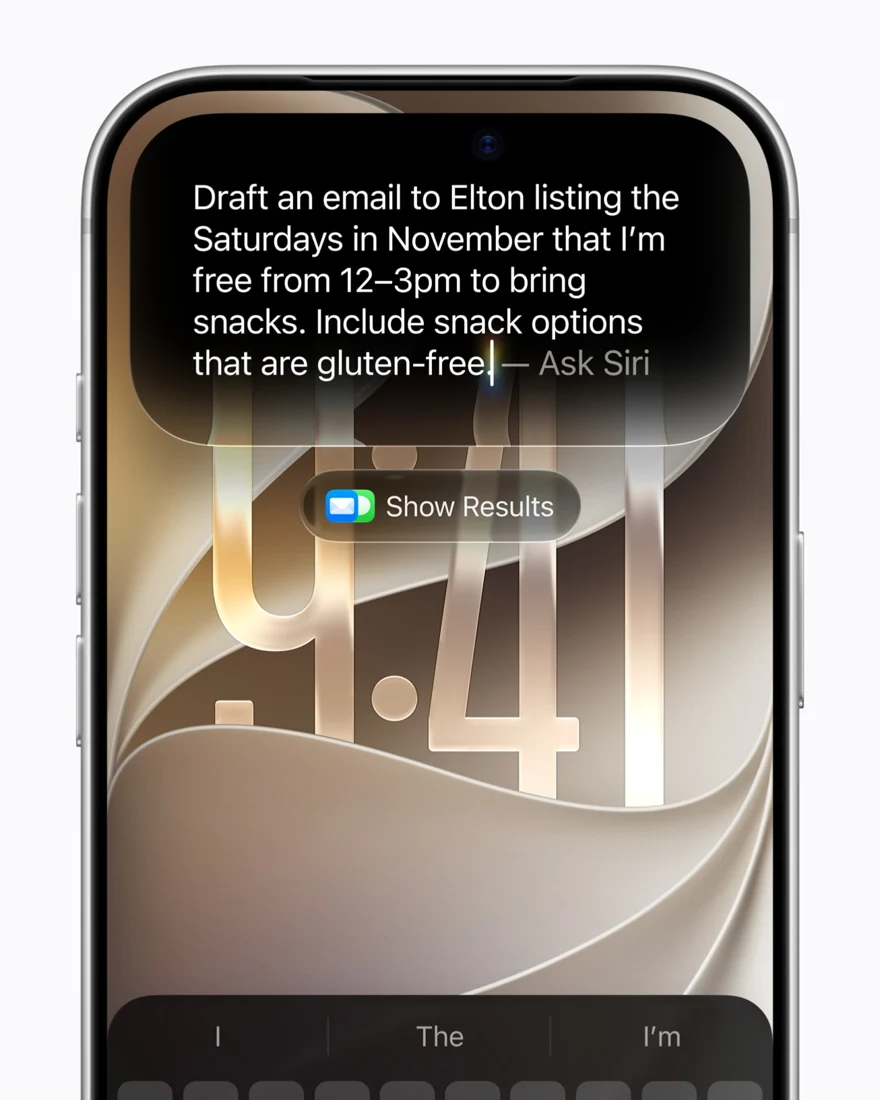
The press release mentions Audio Intelligence features, including Live Rewind, Siri Recap, Sound Recognition, and faster Shazam. But these features have a clear timeline: Live Rewind and Siri Recap will arrive in beta later in 2026, require an Apple Intelligence-enabled iPhone 16 or later (excluding iPhone 16e), are initially available only in English, and won't initially be available in the EU.[1]
Siri AI support also depends on the paired device, language, and region; buying a particular case material doesn't resolve the feature availability conditions along with it.[1]
Treating these "coming later" features as a reason to choose ceramic or titanium today doesn't hold up logically. The material choice happens at the moment of purchase; feature availability happens at some future point—the two aren't in the same decision dimension. If you need a watch today, Siri's later features shouldn't affect your judgment of material; if you're willing to wait, you should also evaluate after the features are actually available, rather than weighting a futures feature into today's material choice.
Back to that 1mm. The ceramic case is one size larger, the display area hasn't changed, weight increases, thickness increases slightly, and what you get in return is two colors—Pearl White and Night Blue—plus a sapphire front crystal. This is a material and aesthetic choice, not a performance upgrade choice. Aluminum has Ceramic Shield 2 and lighter weight, titanium has Radiant Gold and Natural plus sapphire, ceramic has exclusive colors and a heavier feel. Each of the three lines has its trade-offs, and none of them gets an extra advantage in sensors, chip, or battery test conditions.
Which to choose depends on what you're willing to pay for. Paying for color and texture is reasonable; paying for "ceramic is more premium so it's better" is a bit like completing a line of reasoning on Apple's behalf that Apple itself never made.
When actually comparing, you can fix a display-area tier, then put the two colors you like, the case weight, and the matching band together. Compare the small aluminum version with the small ceramic version first, then the large versions, to avoid changing size, material, and band all at once and then attributing every impression to ceramic. Official weight is case data; actual wear is also affected by band choice and tightness, and a few grams' difference can't stand in for a comfort guarantee.
If you have the chance to try one on, observe by raising your wrist to check messages, bending your wrist, and pulling through a sleeve the way you normally do, rather than just looking at colors at the counter. Whether the larger display area makes it easier to read information, and whether the larger case interferes with movement—these are the real questions in the size trade-off. If it's mainly that you like a certain color, you can also frankly write that preference into the budget, then check the actual quote for the full configuration. Choices can carry feeling, and the reasons can still be stated clearly.
Mentioned in this story
These links lead to official or retailer pages. We currently earn no affiliate commission from them. Check the destination for regional availability, configuration and pricing.
Watch View official specifications ↗